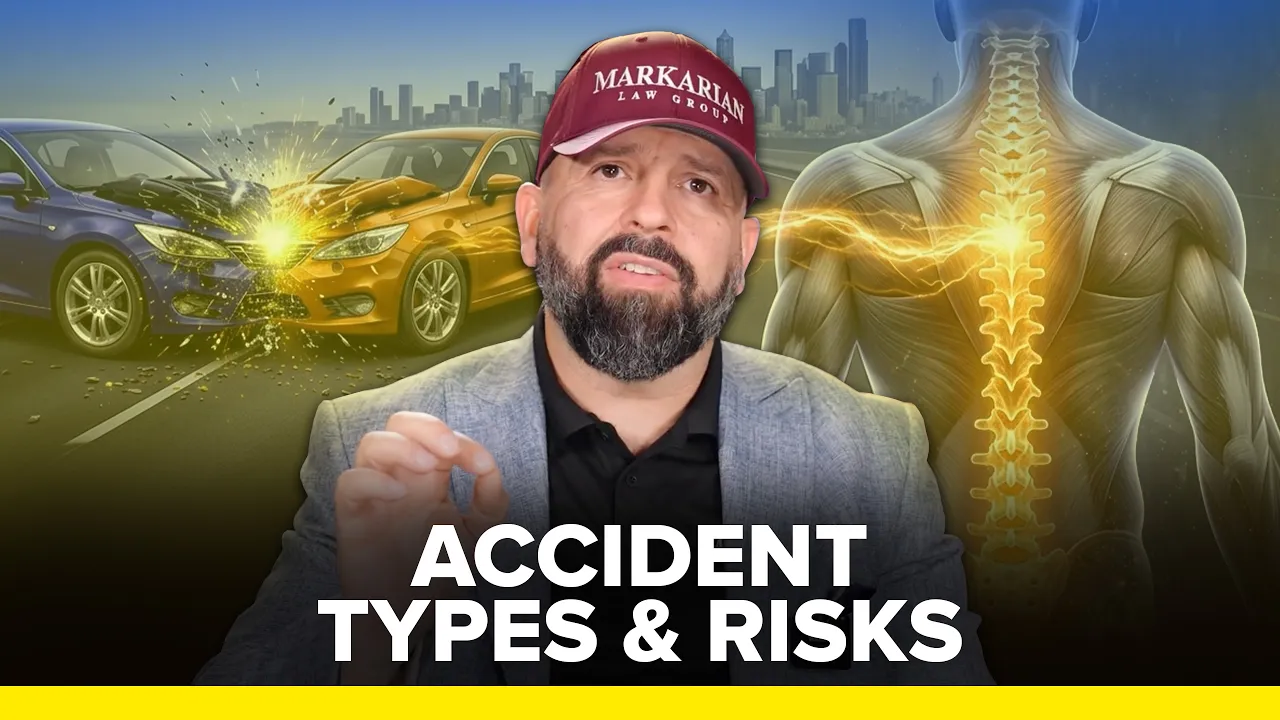
3 Types of Car Accidents | Head-On, T-Bone & Rear-End Collisions Explained

Understand the key differences between head-on, T-bone, and rear-end car accidents, how each collision occurs, and what your legal rights are when you're injured in one.

3 Types of Car Accidents | Head-On, T-Bone & Rear-End Collisions Explained

Not all car accidents are the same. The way a collision happens directly affects the severity of injuries, who is at fault, and how a personal injury claim gets built. Understanding the three most common types of car accidents, head-on, T-bone, and rear-end, can help you make sense of what happened to you and what comes next.

Head-On Collisions

A head-on collision occurs when two vehicles traveling in opposite directions strike each other front to front. These crashes are among the most severe because the combined speed of both vehicles dramatically increases the force of impact. A 40 mph crash between two cars effectively delivers the same force as hitting a stationary wall at 80 mph.

Head-on crashes are commonly caused by wrong-way driving, drowsy or impaired drivers crossing the center line, distracted driving, or vehicles attempting to pass on two-lane roads without a clear line of sight. Injuries from head-on collisions frequently include traumatic brain injuries, spinal fractures, chest trauma from airbag deployment, and lower extremity fractures.

T-Bone (Side-Impact) Collisions

A T-bone collision, also called a side-impact or broadside crash, happens when the front of one vehicle strikes the side of another at a roughly perpendicular angle, forming a T shape. These crashes most often occur at intersections when a driver runs a red light, fails to yield, or misjudges a gap in traffic.

The occupant on the struck side faces a particularly high risk of serious injury because the side door and window offer very little structural protection compared to the front or rear of a vehicle. Common injuries include rib fractures, hip and pelvic injuries, head trauma from side curtain airbag deployment or window contact, and shoulder injuries on the near side.

Rear-End Collisions

Rear-end collisions are the most common type of car accident in the United States. They occur when a following driver fails to stop in time and strikes the vehicle ahead. Distracted driving, tailgating, sudden braking by the lead driver, and poor road conditions are the most frequent causes.

Despite often being considered minor, rear-end crashes can cause significant injuries that are not immediately apparent. Whiplash, the rapid forward-and-backward snapping of the neck, is the hallmark injury and can result in chronic neck pain, headaches, and limited range of motion that persists for months or years. Herniated discs, concussions, and back injuries are also common.

How the Type of Collision Affects Your Case

The mechanics of a crash help establish fault and the extent of injuries. In a head-on collision, investigators will look at which driver crossed into oncoming traffic and why. In a T-bone crash, traffic signals, surveillance cameras, and skid marks help determine who had the right of way. In a rear-end accident, the following driver is usually presumed at fault, though exceptions exist.

Understanding the type of accident you were involved in is the starting point for building a strong personal injury claim. An experienced car accident attorney can review the police report, consult accident reconstruction experts, and identify all liable parties to pursue the full compensation you deserve for your injuries, lost wages, and pain and suffering.

Contact Markarian Law Group After a Car Accident

Whether you were hit head-on, T-boned at an intersection, or rear-ended on the freeway, the team at Markarian Law Group is ready to help. We offer free consultations and work on a contingency fee basis, so there is no upfront cost to get started. Call us at (909) 500-7629 or reach out online to discuss your case today.

Frequently Asked Questions

Frequently Asked Questions

Frequently Asked Questions

What is the most dangerous type of car accident?

Head-on collisions are statistically the most deadly. Because both vehicles are traveling toward each other, the combined force of impact is far greater than in other collision types. Even at moderate speeds, a head-on crash can cause catastrophic injuries including traumatic brain injuries, spinal damage, and internal organ trauma.

What is the most dangerous type of car accident?

Head-on collisions are statistically the most deadly. Because both vehicles are traveling toward each other, the combined force of impact is far greater than in other collision types. Even at moderate speeds, a head-on crash can cause catastrophic injuries including traumatic brain injuries, spinal damage, and internal organ trauma.

What is the most dangerous type of car accident?

Head-on collisions are statistically the most deadly. Because both vehicles are traveling toward each other, the combined force of impact is far greater than in other collision types. Even at moderate speeds, a head-on crash can cause catastrophic injuries including traumatic brain injuries, spinal damage, and internal organ trauma.

Who is usually at fault in a rear-end collision?

In most rear-end collisions, the following driver is presumed at fault because they failed to maintain a safe following distance. However, fault is not always clear-cut. The lead driver can share liability if they cut off the other driver, had broken brake lights, or stopped suddenly without cause. An attorney can help establish the full picture of fault.

Who is usually at fault in a rear-end collision?

In most rear-end collisions, the following driver is presumed at fault because they failed to maintain a safe following distance. However, fault is not always clear-cut. The lead driver can share liability if they cut off the other driver, had broken brake lights, or stopped suddenly without cause. An attorney can help establish the full picture of fault.

Who is usually at fault in a rear-end collision?

In most rear-end collisions, the following driver is presumed at fault because they failed to maintain a safe following distance. However, fault is not always clear-cut. The lead driver can share liability if they cut off the other driver, had broken brake lights, or stopped suddenly without cause. An attorney can help establish the full picture of fault.

What injuries are common in T-bone accidents?

T-bone accidents often cause serious side-impact injuries including broken ribs, hip fractures, head trauma, shoulder injuries, and internal bleeding. The side door provides far less protection than the front or rear of a vehicle, which is why these crashes are especially dangerous for the occupant on the struck side.

What injuries are common in T-bone accidents?

T-bone accidents often cause serious side-impact injuries including broken ribs, hip fractures, head trauma, shoulder injuries, and internal bleeding. The side door provides far less protection than the front or rear of a vehicle, which is why these crashes are especially dangerous for the occupant on the struck side.

What injuries are common in T-bone accidents?

T-bone accidents often cause serious side-impact injuries including broken ribs, hip fractures, head trauma, shoulder injuries, and internal bleeding. The side door provides far less protection than the front or rear of a vehicle, which is why these crashes are especially dangerous for the occupant on the struck side.

What should I do immediately after any type of car accident?

Call 911, stay at the scene, check for injuries, and do not admit fault. Take photos of all vehicles, the road conditions, and any visible injuries. Collect the other driver's insurance and contact information, and gather witness details. See a doctor within 24 hours even if you feel fine, as adrenaline can mask serious injuries.

What should I do immediately after any type of car accident?

Call 911, stay at the scene, check for injuries, and do not admit fault. Take photos of all vehicles, the road conditions, and any visible injuries. Collect the other driver's insurance and contact information, and gather witness details. See a doctor within 24 hours even if you feel fine, as adrenaline can mask serious injuries.

What should I do immediately after any type of car accident?

Call 911, stay at the scene, check for injuries, and do not admit fault. Take photos of all vehicles, the road conditions, and any visible injuries. Collect the other driver's insurance and contact information, and gather witness details. See a doctor within 24 hours even if you feel fine, as adrenaline can mask serious injuries.

How does the type of accident affect my personal injury claim?

The collision type helps establish how the crash occurred and who bears responsibility. Head-on crashes often point to a wrong-way or distracted driver. T-bone collisions frequently involve failure to yield or running a red light. Rear-end impacts usually reflect tailgating or distracted driving. Your attorney will use accident reconstruction, witness statements, and the police report to build a case around the specific collision type.

How does the type of accident affect my personal injury claim?

The collision type helps establish how the crash occurred and who bears responsibility. Head-on crashes often point to a wrong-way or distracted driver. T-bone collisions frequently involve failure to yield or running a red light. Rear-end impacts usually reflect tailgating or distracted driving. Your attorney will use accident reconstruction, witness statements, and the police report to build a case around the specific collision type.

How does the type of accident affect my personal injury claim?

The collision type helps establish how the crash occurred and who bears responsibility. Head-on crashes often point to a wrong-way or distracted driver. T-bone collisions frequently involve failure to yield or running a red light. Rear-end impacts usually reflect tailgating or distracted driving. Your attorney will use accident reconstruction, witness statements, and the police report to build a case around the specific collision type.

Contact us

Take the First Step Towards Legal Solutions